January 16, 2026 | Zaryadye Concert Hall
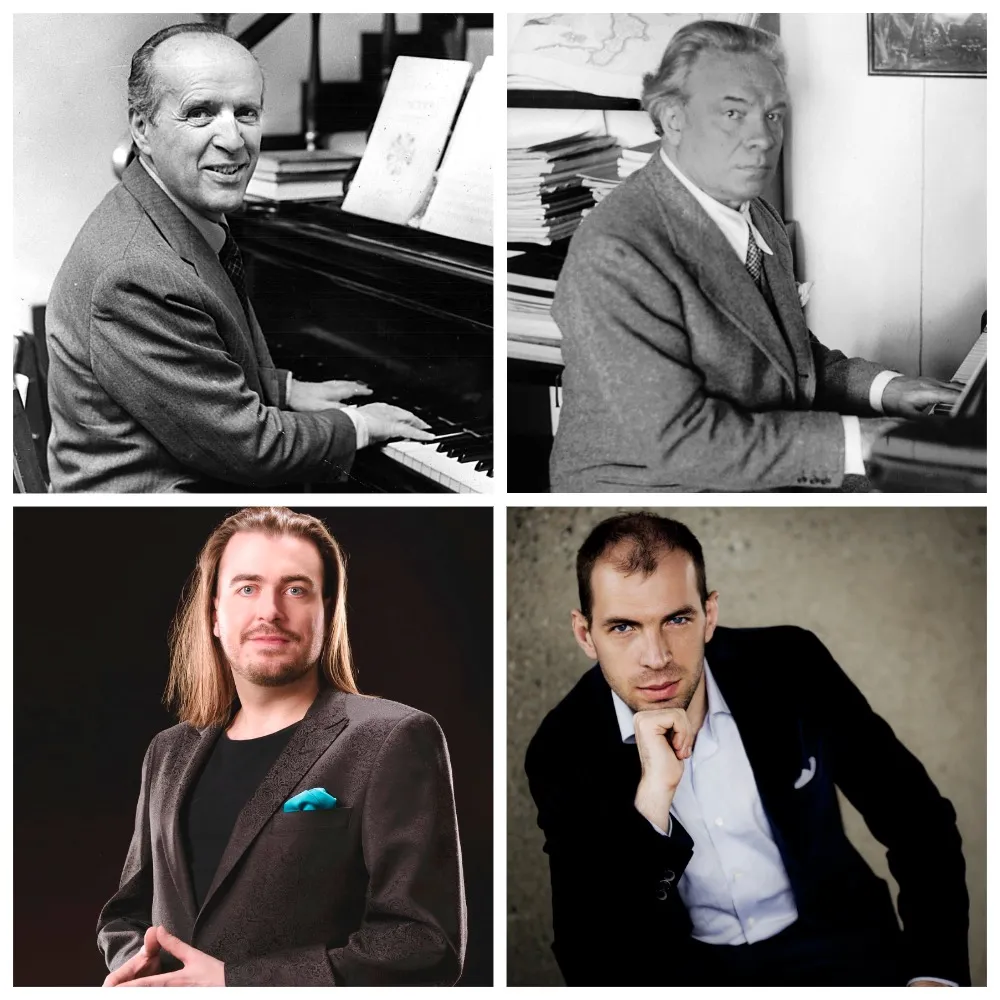
Soloist – Andrei Korobeynikov, piano
Conductor – Dmitry Sinkovsky
Respighi. Tone poems: "Pini di Roma" ("Pines of Rome"), "Fontane di Roma" ("Fountains of Rome"), "Feste Romane" ("Roman Festivals")
Rota. Piano Concerto in E minor “Piccolo mondo antico”
The first concert in the new year the NPR will give at the Zaryadye Concert Hall where the orchestra will be directed by Dmitry Sinkovsky, unique musician who combines in his artistic activities the mastery of a violinist, a countertenor, and a conductor. He has earned his reputation first of all in the field of historically-oriented performances, working with most important in that sphere artists and collectives, playing Baroque music and pieces of the early Classicism, created the La Voce Strumentale ensemble that has gained popularity in Russia and abroad. At present, the ensemble is part of the Nizhny Novgorod Ballet and Opera Theater, where Dmitry Sinkosky is currently Chief Conductor.
For his debut with the NPR the maestro has chosen works by Italian composers of the 20th century. Music lovers know Nino Rota as a great author of soundtracks. He collaborated with such grands of filmmaking as Federico Fellini, Luchino Visconti, Franco Zeffirelli, Francis Ford Coppola. Any music addict can easily sing his melodies from “The Godfather” or “Otto e mezzo”. For his music to “The Godfather” Nino Rota got an Oscar Award. Born in Milan, Nino Rota got his musical education at the Santa Cecilia Academy in Rome where famous Alfredo Casella, a colleague and friend of Ottorino Respighi, taught him. Then he continued his education at the Curtis Institute in Philadelphia where the Italian composer got well acquainted with American culture.
Along with music for films, Nino Rota wrote operas, ballets, a great many works for orchestra and chamber formations. His Piano Concerto in E minor “Piccolo mondo antico” (1978) is his final oeuvre whose title is referred to Antonio Fogazzaro's novel of the same title (“The Little World of the Past”) about the life of a family at Lake Lugano on the brink of the second war for Italy's independence with Austria (1895). The Concerto is written in the Post-Romantic style with exquisite melodies inherent to the composer in general. The piano part in the Concerto will be played by Andrei Korobeynikov, also a musician of broad views and aims, a professional pianist and a lawyer, having won over 20 prizes at important international competitions.
The main part of the NPR's program will be given to the symphonic masterpieces by Ottorino Respighi that brought him a world fame. One of the brightest and most influential musicians of Italy, Ottorino Respighi got educated as composer, violinist, violist, conductor and musicologist. He was one of those few who were called architects of innovations in Italian music at the beginning of the 20th century. Among his teachers there were Nikolai Rimsky-Korsakov, whose mastership of orchestration had played a great role in Respighi's symphonism, Ferruccio Busoni and Max Bruch.
A success came to Respighi after the premiere of his tone poem Fountains of Rome (1916) which was followed by two others: Pines of Rome (1924) and Roman Festivals (1928) forming a triptych. According to the composer, the first poem pictured four Roman fountains watched at the time when their characters are in harmony with their scenery or when their beauty is most impressive. The second poem is dedicated to most significant spots of the Italian capital (from the Villa Borghese Park to the Appia Road which remembers marching Roman legions in ancient times) and other pages of its history. The composer included into the score a nightingale singing which he had recorded himself. In Rome Festivals blood-thirsty crowds are watching Christians martyrs thrown to ferocious lions (“Circenses”), mediaeval pilgrims, coming to Rome for absolution, enjoying the Holy City and bells clinging (“Il Jubileo”), aristocrats of the Renaissance times relishing in hunting and love songs (“L'Ottobrata”), and Respighi's contemporary citizens on the eve of the Epiphany rejoicing the holidays (“La Befana”).