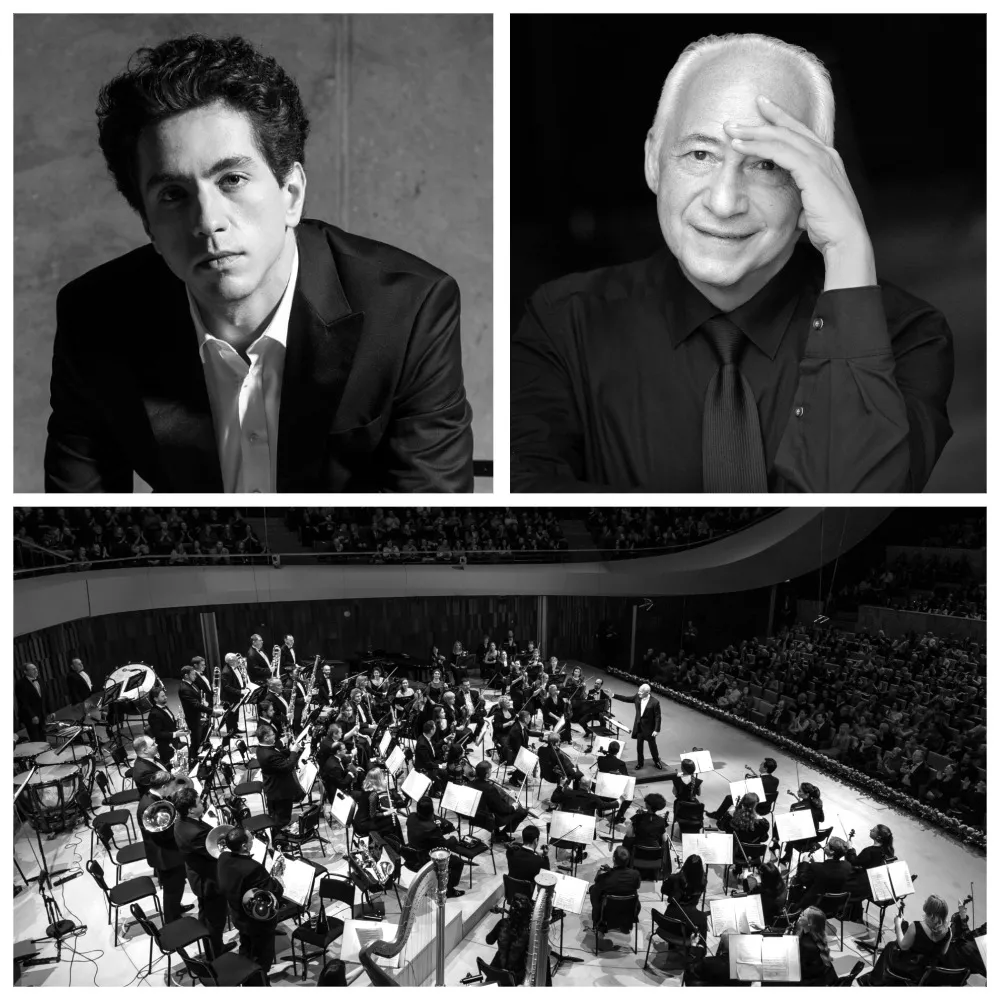
February 3, 2026 | Zaryadye Concert Hall
Soloist – Konstantin Yemelyanov, piano
Conductor – Vladimir Spivakov
Schubert. Symphony No. 4 in C minor ("Tragic"), D 417
Beethoven. Concerto No. 3 for piano and orchestra in C minor, Op. 37
The upcoming concert by Vladimir Spivakov and the NPR in the Zaryadye Hall brings together two masterpieces of Austro-German classical music, two music dramas written in the early 19th century: Beethoven's Third Piano Concerto and Schubert's Fourth Symphony. Both works are written in C minor, one of the most common minor keys of the 18th century, used to convey deepest sorrow. Mozart's 24th Piano Concerto and the piano Fantasy in C minor, for example, are precisely such works. However, Beethoven changed the attitude toward C minor, which, according to contemporaries and scholars of his work, he regarded as a "rebellious, heroic tonality" which would allow to compose extremely tense music full of high pathos.
Many of Beethoven's most important heroic and dramatic works were written in this key, including the Fifth Symphony, the "Pathétique" Piano Sonata, the Funeral March from the "Eroica" Symphony, and the "Coriolan" Overture. Piano Concerto No. 3 belongs here as well. It’s Beethoven's first major symphonic work in a minor key, which became a full-fledged drama. An abstract soloist-orchestra rivalry is depicted here as a confrontation between the hero's personality and fate—the very Fatum that so clearly "knocks at the door" in Beethoven's Fifth Symphony. And from this struggle, judging by the brilliant contredanse in the Concerto's Finale, emerges the conqueror.
The piano part in Beethoven's Third Piano Concerto will be played by Konstantin Yemelyanov, the 3rd Prize winner at the XVI International Tchaikovsky Competition and the All-Russian Music Competition.
Schubert's first minor key symphony was his Fourth, "Tragic". In this work, the 19-year-old composer, a follower of the Viennese classical school, denied any imitation and, for the first time in his life, ventured to combine symphony and tragedy, doing so in his own authentic and exceptionally talented way. Here, the insightful young artist anticipated the foundations of the lyrical-dramatic symphony of the second half of the 19th century. Many years later, Igor Stravinsky called this score "Schubert's most astonishing symphonic achievement".
Before the concert, at 6:00 PM, a lecture "Dialogues in C Minor" will be held in the Small Hall of Zaryadye. Elena Dvoskina, PhD in Art History and Associate Professor at the Moscow State Tchaikovsky Conservatory, will give the lecture. Admission to the lecture is with a concert ticket, and no prior registration is required.