September 2026 | Svetlanov Hall of the Moscow Performing Arts Center
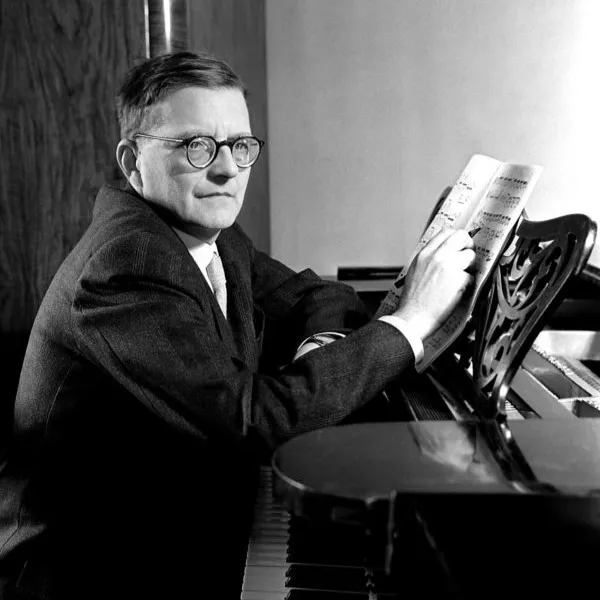
Concert to the 120th Anniversary of Dmitri Shostakovich
Soloist – Andrey Mikhailovsky, clarinet
Conductor – Vladimir Spivakov
Mozart. Concerto for clainet and orchestra in A major, KV 622
Mahler. Adaio from Symphony No. 10
Shostakovish. Symphony No. 5 in D minor, Op. 47
Vladimir Spivakov and the National Philharmonic Orchestra of Russia will open the new season of the Moscow International Performing Arts Center on September 24. The concert will mark the 120th anniversary of the birth of Dmitri Shostakovich, one of the greatest composers of the 20th century.
Shostakovich’s music has always held a special place in the repertoire of Vladimir Spivakov, both as a violinist and as a conductor. His first encounter with the composer’s music was one of the earliest and most profound artistic experiences of his life. In 2005, the maestro dedicated the Colmar Music Festival to one of his favorite composers and wrote a deeply personal essay, The Voice of All the Voiceless. Ten years later, he was one of the initiators of the first monument to Shostakovich in Moscow, created by sculptor Georgy Frangulyan and installed in front of the Moscow International Performing Arts Centre.
Vladimir Spivakov: “Some people seem to me like chance fellow travelers in life, who jump onto a tram and then jump off again. Others immerse themselves in a reality they have lived through and suffered, embracing the drama of their time as their own. I believe that Shostakovich was a chronicler of his era, despite the terrible personal and social duality he had to endure. The motto of an entire generation of Soviet musicians, artists, and performers became Eisenstein’s words: that it is wonderful to die for one’s country, but even more important to live for it… Life will change, governments will change, much will change, but Dmitri Dmitrievich will remain. His works reflected their time as if in a mirror, yet the depth of this music makes it relevant in every age. It shimmers with facets that reach into the soul of modern people and inevitably leave their mark on us.”
The culmination of the concert program will be Shostakovich’s Symphony No. 5 — a monumental fresco, which the maestro describes in these words: “There are things in which composers, at certain moments in history, have expressed themselves more powerfully than writers. Dmitri Shostakovich is a striking example of this. In 1937, he wrote his Fifth Symphony, creating an enduring monument to his era. Unfortunately, there is no equivalent in literature… The finale of the symphony is outwardly joyful and optimistic. It seems as though columns of demonstrators are marching past — just as we all marched along Red Square in Moscow or Palace Square in Leningrad. People march tightly packed, shoulder to shoulder. And suddenly the hero (and of course, that is Shostakovich himself) dies, he is killed, and the people around him do not notice. They simply keep marching at the same pace, without slowing their steps.”
The program will also include works by Mozart (Clarinet Concerto) and Mahler (Adagio from Symphony No. 10) — two Austrian geniuses who exerted an enormous influence on the formation of Shostakovich’s musical thinking. For Shostakovich, Mozart embodied the “youth of music,” an “eternally young spring that brings humanity the joy of spring renewal and spiritual harmony.” The Russian master greatly admired in Mozart’s work “the unfathomable depth of its profoundly human images, the astonishing boldness of its innovative discoveries, which propelled musical art decades forward, and the perfect harmony and balance of its form.” Mahler, meanwhile, remained Shostakovich’s favorite composer for many years. His Das Lied von der Erde was a work that Shostakovich would have taken with him without hesitation to a desert island.